Construction Takeoff vs Estimate vs BOQ

Construction Takeoff vs Estimate vs BOQ
A construction takeoff, construction estimate and Bill of Quantities can contain much of the same underlying project information, but they are not interchangeable.
For an Australian builder preparing a tender, this distinction matters. Ordering the wrong deliverable can mean paying for information you already have, receiving quantities when you expected pricing, or trying to price a document that does not provide enough detail about the measured scope.
The simplest way to understand the difference is this:
A construction takeoff measures the work. A Bill of Quantities structures the measured work. A construction estimate determines what the work is expected to cost.
That is the short answer. In practice, however, the boundaries can overlap.
A detailed construction estimate will usually rely on a quantity takeoff. A BOQ may be issued without any prices so tenderers can insert their own rates. A builder may request a "takeoff" but actually expect measured quantities separated by trade, marked-up drawings, assumptions and waste allowances. On many residential projects, the estimator may move directly from measurement into pricing without preparing a formal BOQ at all.
This is why the spreadsheet title matters less than understanding exactly what was measured, what documentation was used, whether rates are included and how the information is intended to be used.
 Construction Takeoff vs Estimate vs BOQ: The Quick Difference
A construction takeoff answers the question, "How much work is there?" It measures quantities such as concrete volumes, wall areas, linear metres, item counts and trade quantities from the project documentation.
A Bill of Quantities, usually shortened to BOQ, answers a slightly different question: "Exactly what measurable work are we asking someone to price?" It takes measured quantities and organises them into a structured schedule, normally with descriptions, units and quantities.
A construction estimate answers "What is this work likely to cost?" It combines quantities with material rates, labour, subcontractor pricing, plant, preliminaries, allowances and other commercial considerations.
So while all three may start with the same drawings, they serve different purposes.
What Is a Construction Takeoff?
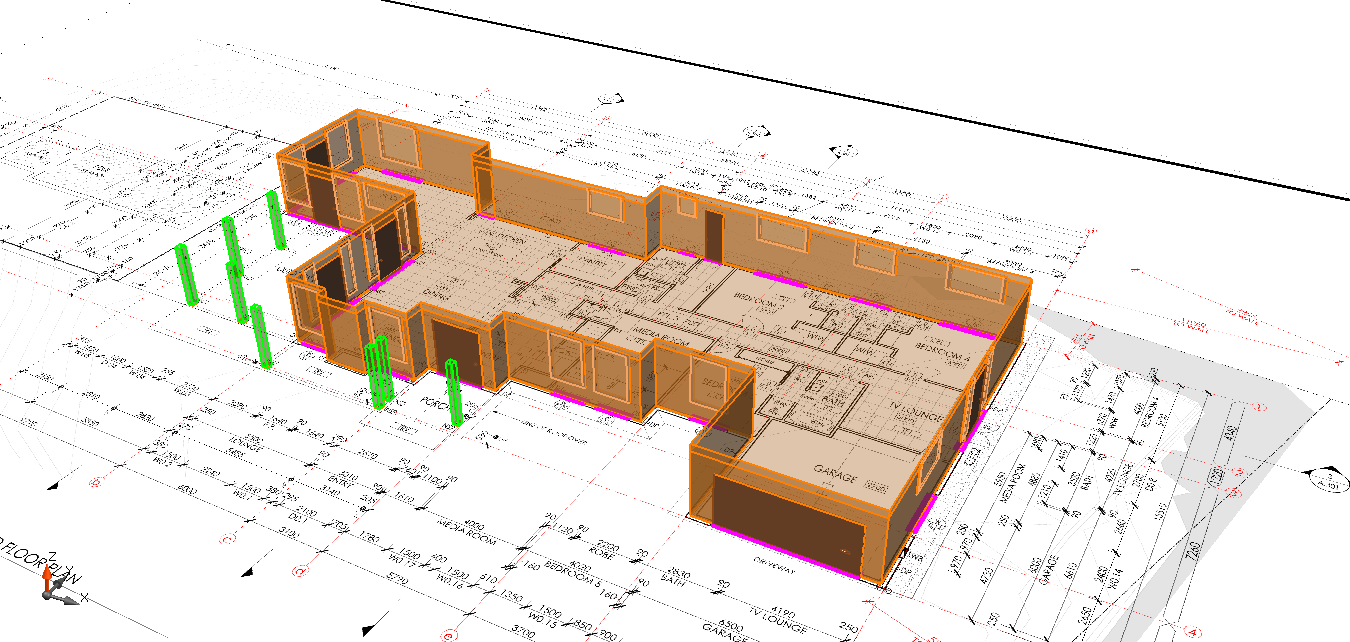
A construction takeoff is the process of extracting measurable quantities from architectural, structural, civil and other project documentation.
The estimator works through the drawings, schedules and specifications and converts the design into quantities that can be priced or used for procurement.
Depending on the project, that may include cubic metres of excavation, fill or concrete; square metres of formwork, roofing, flooring, plasterboard, ceilings or finishes; linear metres of framing, skirting, pipework or kerbs; tonnes or kilograms of reinforcement and structural steel; and counts of doors, windows, fittings and fixtures.
The purpose is measurement, not pricing.
That distinction is particularly important for builders who already have strong supplier relationships, established subcontractor rates and their own internal pricing systems. In those circumstances, they may not need another estimator to determine what concrete, timber, labour or subcontractor work should cost. They simply need an accurate measurement base from which their own team can price.
That is where a construction takeoff service can be particularly useful.

A Takeoff Quantity Is Not Always the Quantity You Should Order
This is one of the most useful distinctions to understand.
Suppose a set of drawings contains 186 square metres of floor tiling. An accurate takeoff may therefore show 186 square metres.
That does not necessarily mean the builder should order exactly 186 square metres of tiles.
The purchasing quantity could be higher because the builder needs to account for tile size, laying pattern, cutting, breakage, box quantities, spare stock and site conditions.
The same principle applies throughout construction. Reinforcement requires laps and development lengths. Roofing has overlaps. Timber is purchased in stock lengths. Plasterboard is ordered by sheet size rather than by theoretical area alone.
For this reason, professional takeoff documentation should make clear whether a figure represents the net measured quantity, an adjusted quantity or a procurement quantity.
It is also important to avoid applying waste twice. If an estimator has already increased the measured quantity to include waste and the builder then adds another waste factor when pricing, the tender can quietly become overstated.
The distinction between different types of measurement is covered further in our guide to material takeoff vs quantity takeoff.
What Is a Bill of Quantities?
A Bill of Quantities takes measured construction work and presents it in a structured format that can be priced consistently.
This is where a BOQ differs from a basic takeoff.
A takeoff might tell the estimator that the project contains 186 square metres of floor tiling.
A BOQ should go further by describing the item, identifying the unit of measurement and placing the quantity within the appropriate section of the work.
For example, the document might describe the nominated floor tiling, show the unit as square metres and state a quantity of 186. Depending on the purpose of the BOQ, there may then be columns for the tenderer to insert a rate and total amount.
The value of this structure becomes more obvious as projects become larger.
If three head contractors are tendering from the same drawings without a common measured schedule, each contractor may interpret the scope slightly differently. One tenderer may include an item that another excludes. Another may use a provisional allowance. Another may interpret a detail or trade boundary differently.
A BOQ creates a common basis for pricing, making the returned tenders easier to understand and compare.
In Australian quantity surveying practice, formal measurement methods help ensure consistency in how work is described and measured. The Australian Institute of Quantity Surveyors publishes the Australian and New Zealand Standard Method of Measurement, commonly referred to as ANZSMM.
Does a BOQ Have to Include Prices?
No.
This is an important point because online explanations often blur the difference between a BOQ and a priced estimate.
A BOQ can be issued unpriced. In a tender situation, this allows each contractor to insert its own rates against the same measured scope.
Once the rates and amounts have been entered, it becomes a priced BOQ.
A BOQ may also be prepared internally with pricing already included. What matters is its intended purpose.
The existence of quantities and rate columns does not automatically make a document a construction estimate. A formal estimate considers a wider range of project costs and commercial factors.
For more detail on this distinction, see our guide to Bill of Quantities vs building estimates or our Bill of Quantities services.
What Is a Construction Estimate?
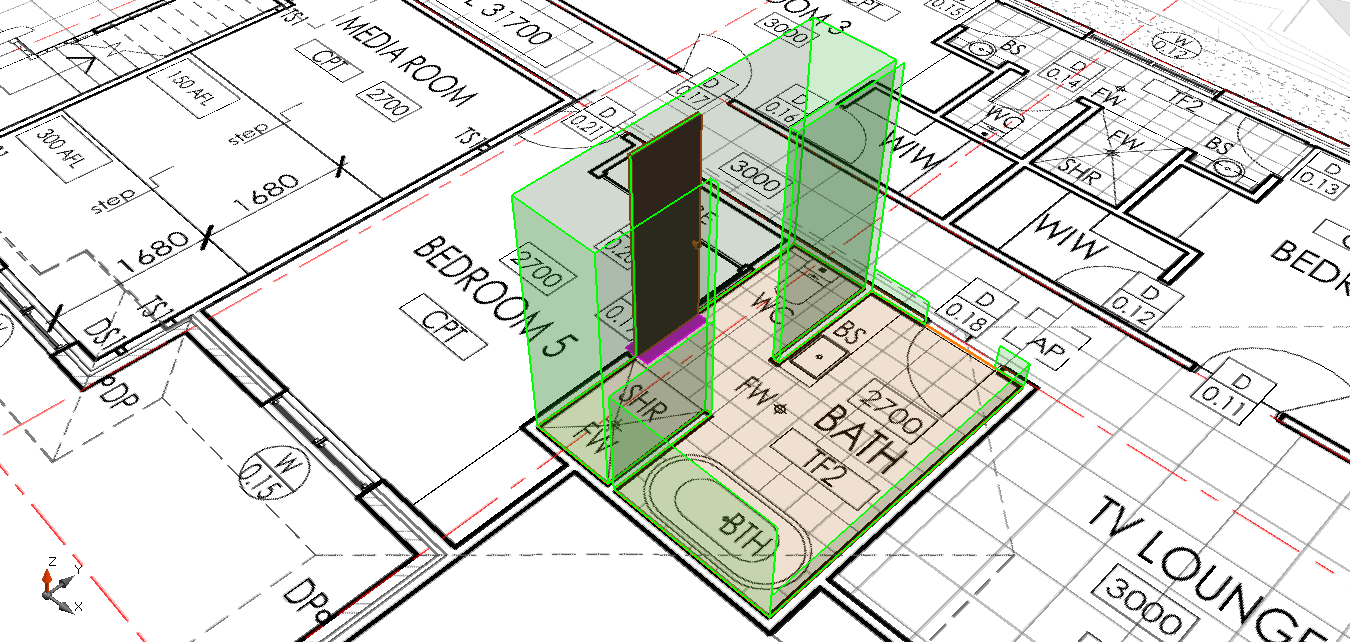
A construction estimate takes the measurable project scope and determines what the work is expected to cost.
This means applying more than simple material rates.
A detailed estimate may need to consider material supply costs, labour required to install the work, expected productivity, subcontractor pricing, plant, access, supervision, temporary works, site establishment, preliminaries, risk allowances and other project-specific costs.
It may also need to address prime cost items, provisional sums, incomplete documentation, assumed construction methodology and market conditions.
That is why two estimators can start with exactly the same measured quantity and still arrive at different estimated costs.
The quantity might be identical. The commercial assumptions may not be.
Consider 100 square metres of wall construction. One estimator may assume straightforward access, standard productivity and an established subcontractor rate. Another may recognise difficult access, a compressed programme, additional handling or a less efficient construction sequence.
The measurement is still 100 square metres.
The cost of building it can vary significantly.
This is the part of estimating that software alone cannot resolve. Measurement technology can calculate lengths, areas and counts quickly, but construction knowledge is still required to understand what has actually been designed and what will be required to build it.
Estimating Australia provides construction estimating services for residential, commercial and civil projects throughout Australia.
Not Every Estimate Is a Rough Estimate
The word "estimate" can also create misunderstanding.
An estimate does not automatically mean a rough figure.
A preliminary estimate prepared during early design may be broad because there is not enough project information available for detailed measurement. At that stage, the estimator may rely on elemental rates, historical data, floor areas and reasonable allowances.
A tender estimate can be very different.
Once the architectural, structural and services documentation has been developed, an estimator may measure individual trades in detail and apply current supplier, subcontractor and labour rates.
Both are construction estimates.
The difference is the project stage and the quality of the information available.
This is also why any discussion about estimating accuracy should begin with the documentation. An estimator cannot measure detail that has not yet been designed.
 How a Takeoff, BOQ and Estimate Fit Together
On a well-documented project, the process commonly starts with the drawings, specifications, schedules and other tender documents.
The estimator then measures the work.
Those quantities may be organised into a BOQ if a formal structured schedule is required.
The quantities are then priced to produce an estimate.
In simple terms, the process is:
Project documentation to measurement to structured quantities, where required, to pricing and estimating.
However, not every project needs every step.
A residential builder may move directly from takeoff into estimating software. A subcontractor tendering for one trade may only need a trade-specific takeoff. A principal inviting several head contractors to tender may benefit from issuing an unpriced BOQ. A commercial builder may use the consultant's BOQ while also completing an internal takeoff to check the quantities before submitting a tender.
The Australian Government's procurement lifecycle guidance also reflects the broader principle that requirements should be clearly defined before approaching the market.
Private construction procurement differs from government procurement, but the commercial principle is similar: clearer scope generally creates a better basis for reliable and comparable pricing.
A Practical Example: One Floor Tiling Package
Consider a builder pricing a multi-unit residential project.
The current architectural drawings show 186 square metres of nominated floor tiling.
The takeoff records that measured area.
If a BOQ is required, the quantity is then placed into the appropriate trade section with a clear description and unit. An unpriced tender BOQ might show the 186 square metres while leaving the rate and amount columns blank for the tenderer.
The construction estimate then takes that measured scope and works out the expected cost.
That may require consideration of the tile supply rate, laying cost, adhesives, grout, trims, substrate preparation, waste treatment and the relevant subcontractor quotation.
The builder still has another commercial decision to make after that.
The final tender price may need to account for project preliminaries, overhead recovery, margin, risk and tender strategy.
This means the same 186 square metres can appear throughout the estimating process, but it is doing a different job at each stage.
The takeoff says how much work exists. The BOQ provides the framework for pricing that work. The estimate determines what the work is expected to cost.
Construction Takeoff vs BOQ: What Is the Practical Difference?
The practical difference between a construction takeoff and BOQ is largely one of structure and purpose.
Takeoff information may be prepared primarily for an estimator's internal use. It may be organised by drawing, level, trade or measurement sequence.
A BOQ needs to be sufficiently structured and described so that another party can understand what has been measured and price it accordingly.
This distinction matters most when the document is being passed between different parties.
An estimator may understand perfectly what "floor tiling, 186 square metres" refers to in an internal takeoff file because they personally measured it.
A tenderer receiving a BOQ needs greater clarity. They need to understand the item description, unit, quantity and scope they are expected to price.
This is why it is more accurate to think of a BOQ as a structured pricing framework based on measured quantities, rather than simply another name for a takeoff.
Construction Takeoff vs Estimate: Which Do You Actually Need?
The answer depends largely on who already controls the pricing knowledge.
If your business already knows what materials cost, has reliable supplier arrangements, uses trusted subcontractors and understands its own labour, overhead and margin requirements, outsourcing an entire estimate may be unnecessary.
What you may really need is measurement capacity.
A specialist estimator can complete the time-consuming takeoff while your team applies the rates it already trusts.
This can also help builders preserve control of commercially sensitive information such as subcontractor arrangements and final margins.
If, however, you need both the measurement and the project pricing prepared, a full construction estimate is the more appropriate deliverable.
The same principle applies when deciding whether to outsource construction estimating. Outsourcing does not have to mean handing over the entire pricing process. You can match the service to the part of the estimating workflow where your team actually needs support.
Which Document Is Best at Different Stages of a Project?
During early feasibility, a preliminary estimate is usually more useful than a detailed takeoff because there may not yet be enough documentation to measure accurately.
Once developed drawings are available, a builder who already controls its own pricing may prefer a takeoff.
If multiple contractors need to price the same defined scope, a BOQ can provide a more consistent basis for comparison.
When a builder is preparing a detailed tender and needs to understand the complete expected cost of the works, a detailed construction estimate supported by accurate takeoffs becomes more appropriate.
For formal tender pricing support, see our pre-construction tender estimating services.
Where Problems Occur
Most problems do not arise because somebody has forgotten the technical definition of a takeoff or BOQ.
They occur because expectations were never clearly established.
A builder may assume waste has already been included when the estimator has supplied net quantities. A takeoff may be measured perfectly but from a superseded drawing revision. A tenderer may assume that a BOQ item includes work that the person preparing it considered part of another trade.
Another common problem is hidden assumptions.
If the documentation does not clearly show how an element is constructed, an experienced estimator may still be able to make a reasonable allowance. The important part is making that assumption visible.
A precise-looking quantity does not automatically mean the underlying project information was precise.
That is particularly important in tendering, where a number carried to two decimal places can create a false sense of certainty.
The strongest estimating documentation does more than provide numbers. It creates an audit trail showing how those numbers were reached and what information they rely on.
What Should You Confirm Before Ordering a Takeoff, BOQ or Estimate?
Before engaging an estimator, confirm the drawing revisions and specifications to be used, the trades included, whether marked-up drawings will be supplied, whether quantities are net or include waste, how assumptions and exclusions will be recorded, whether labour and material pricing is required, whether preliminaries and commercial allowances are included, and how later drawing revisions will be handled.
Those details are often more important than whether the requested document is labelled a takeoff, BOQ or estimate.
A builder asking for "a BOQ" may actually want a full priced estimate.
Another builder asking for "an estimate" may only want measured trade quantities so its own estimator can apply internal rates.
Defining the deliverable before work begins prevents both parties from working from different assumptions.
Frequently Asked Questions
Is a construction takeoff the same as an estimate?
No. A construction takeoff measures the work shown in the project documentation. A construction estimate uses those quantities, together with rates, allowances and other cost information, to calculate the expected cost of completing the work.
Is a BOQ the same as a takeoff?
No. They are closely related, but a takeoff is fundamentally about measurement. A BOQ takes measurable work and organises it into a structured schedule that another party can understand and price.
Does a Bill of Quantities always contain prices?
No. A BOQ may be issued unpriced so tenderers can insert their own rates. It may also be supplied as a priced BOQ. The required format depends on how the document will be used.
Can you prepare a construction estimate without a BOQ?
Yes. This is common, particularly on residential and smaller commercial projects. The estimator can complete the takeoff and price the measured work directly without producing a separate formal BOQ.
What is the difference between a quantity takeoff and material takeoff?
A material takeoff focuses primarily on physical materials. A quantity takeoff can include the wider measurable construction scope, including activities such as excavation, demolition and formwork that are not simply materials to be purchased.
Which is better for tendering, a BOQ or an estimate?
They perform different roles. A BOQ provides a consistent measured basis for contractors to price. An estimate determines the expected cost to the contractor. On many tenders, both are useful.
Do I need a takeoff if I already know my supplier and subcontractor rates?
Quite possibly. In fact, this is one of the strongest reasons to use a takeoff-only service. If your business already has reliable rates and understands its own labour, overheads and margin, outsourcing the measurement can save estimating time without giving up control of the final price.
The Bottom Line
A construction takeoff, Bill of Quantities and construction estimate are connected, but each performs a different job.
A takeoff measures the work. A BOQ structures the measurable scope. An estimate determines what the work is expected to cost.
More importantly, terminology alone should never determine whether a document suits your project.
Before relying on any takeoff, BOQ or estimate, understand what has actually been measured, which drawings were used, whether pricing is included, how waste and allowances have been treated and what assumptions sit behind the figures.
Good estimating begins with clear scope.
When the scope, measurement and assumptions are clear, supplier pricing, subcontractor comparisons, procurement and tender decisions become much easier to manage.
Need a Construction Takeoff, BOQ or Detailed Estimate?
If your team already has its own supplier, subcontractor and labour rates, Estimating Australia can provide the measured quantities while you retain control of pricing and margin.
If you need the project measured and priced, we can prepare a more complete estimating package to suit the project and tender stage.
Offices
100% ONLINE
P: 1300 944 122
Call to arrange an online meeting.
Our Estimators are 100% Local,
With a long history of experience in
your industry, we know YOU.
Head Office / Administration
Brisbane
Postal Details
Suite 279 /
4/16-18 Redland Bay Rd
Loganholme
QLD 4129
All Enquiries
P: 1300 944 122
Sydney
Postal Details
Suite 279 / 377 Kent St
Sydney
NSW 2000
All Enquiries
P: 1300 944 122
Melbourne
Postal Details
Suite 271 /
439 Little Bourke St
Melbourne
VIC 3000
All Enquiries
P: 1300 944 122
Phone
1300 944 122